Probiotics for urinary health: what to check before you buy
Choosing a probiotic can feel confusing when every label promises something different. This guide helps you compare the exact strains, serving size, research and safety details, so you can make a more informed choice for your routine.
- Separate species names from exact strain identification
- Compare oral research with vaginal-route research carefully
- Use seven practical checks before choosing a supplement
Looking at a combined cranberry and probiotic formula? Compare FemiCore’s ingredients and prices →
 L. crispatus
 L. acidophilus
 L. gasseri
 L. plantarum
 L. casei
Ingredient illustrations are visual identifiers, not proof of clinical outcomes.
Do probiotics for urinary health work?
The responsible answer is: the evidence is promising in some specific settings, but it is not strong enough to treat every probiotic product as proven. Results differ by population, exact strain, route of administration and study design.
“Contains Lactobacillus” is a starting point—not a verdict.
Some trials have reported fewer recurrences with particular vaginal or combined probiotic regimens. Other reviews have found no statistically significant overall benefit. That conflict makes label transparency and product-specific evidence essential.
Three evidence levels buyers should keep separate
Why Lactobacillus is studied
Lactobacillus species are part of the urogenital microbiome research landscape. A plausible mechanism can justify research, but it does not prove that every capsule produces a clinical benefit.
Exact organisms and route matter
A study using a defined vaginal strain cannot automatically validate an oral product that lists only the species name. Strain identity, delivery route and dose must match before evidence can be transferred.
The highest commercial test
The strongest product claim requires research on the complete formula itself. Ingredient studies do not establish that an undisclosed blend, dose or combination performs the same way.
What recent research actually shows
The research is not uniformly positive or negative. The most useful conclusion is that outcomes depend on the intervention tested.
Positive signal in a 2024 trial
A randomized, double-blind trial involving 174 premenopausal women reported fewer recurrent symptomatic UTIs in the vaginal-probiotic and combined oral-plus-vaginal groups than in the placebo group. The oral-only group did not show the same clear pattern.
Review the PubMed record →Uncertainty remains across studies
A 2021 systematic review and meta-analysis of three randomized trials found no statistically significant reduction in recurrence overall. NICE therefore advises that evidence for Lactobacillus probiotics in recurrent UTI remains inconclusive.
Review the systematic analysis →Species name versus exact probiotic strain
A species is a broad biological category. A strain is a more precise identifier within that species. Two products displaying the same species name may not contain the same researched strain, dose or delivery system.
| Label element | What it can tell you | What still needs verification |
|---|---|---|
| Genus and species Lactobacillus crispatus |
Identifies the general organism represented in the formula. | The exact strain used, the studied route and whether the commercial product matches published research. |
| Strain code Letters or numbers after the species |
Allows closer comparison with a specific clinical study. | Whether the strain is present at the studied quantity and remains viable through shelf life. |
| CFU count Colony-forming units |
Provides a viability quantity when properly disclosed. | Whether the number is guaranteed at manufacture or through the expiration date. |
| Proprietary blend weight | Shows the combined mass of ingredients in the blend. | It does not reveal each strain’s quantity and is not equivalent to a transparent CFU count. |
Oral and vaginal probiotics are not interchangeable
Convenient, but evidence must match
Oral supplements are easier to incorporate into a routine. However, a product should not borrow the result of a vaginal intervention unless direct evidence supports that comparison.
Studied more directly in some trials
Several urinary-recurrence studies used vaginal Lactobacillus preparations. A 2023 systematic review found encouraging signals, while concluding that actual recurrence reduction, dosing and duration remained uncertain.
Interesting, not universal proof
A combined intervention can test a different biological and behavioral strategy. Its outcome cannot be assigned to one component—or to an unrelated retail formula—without supporting data.
Seven checks before buying probiotics for urinary health
Identify the exact strain
Look beyond “probiotic blend.” A complete strain identifier makes it possible to compare the label with published research.
Check transparent CFUs
Determine whether the label discloses total CFUs, individual strain quantities and whether viability is guaranteed through expiration.
Match route to evidence
Do not assume an oral capsule is equivalent to a vaginal preparation used in a clinical trial.
Define the intended outcome
General microbiome support, digestive wellness and recurrence prevention are different outcomes requiring different evidence.
Separate ingredient and formula evidence
A study on one strain does not validate every multi-ingredient supplement that includes the same species.
Review storage and expiration
Heat, moisture, packaging and storage conditions may affect viability. Follow the manufacturer’s instructions.
Verify safety, price and refund terms
Review suitability with a professional when health conditions, pregnancy, breastfeeding or medication are involved. Confirm current commercial terms before purchase.
Where does FemiCore fit?
FemiCore is marketed as a once-daily dietary supplement for women interested in bladder, urinary and feminine microbiome support. Its seller-provided label lists five Lactobacillus species alongside cranberry and selected botanicals.
The important limitation is transparency: the available label presents the probiotics inside a blend and does not provide the exact strain codes or a clearly separated CFU count for each organism. Therefore, FemiCore should not be treated as equivalent to a specific probiotic regimen used in a published trial.
Its most defensible positioning is a convenient multi-ingredient wellness formula—not a proven treatment or guaranteed solution for urinary symptoms.
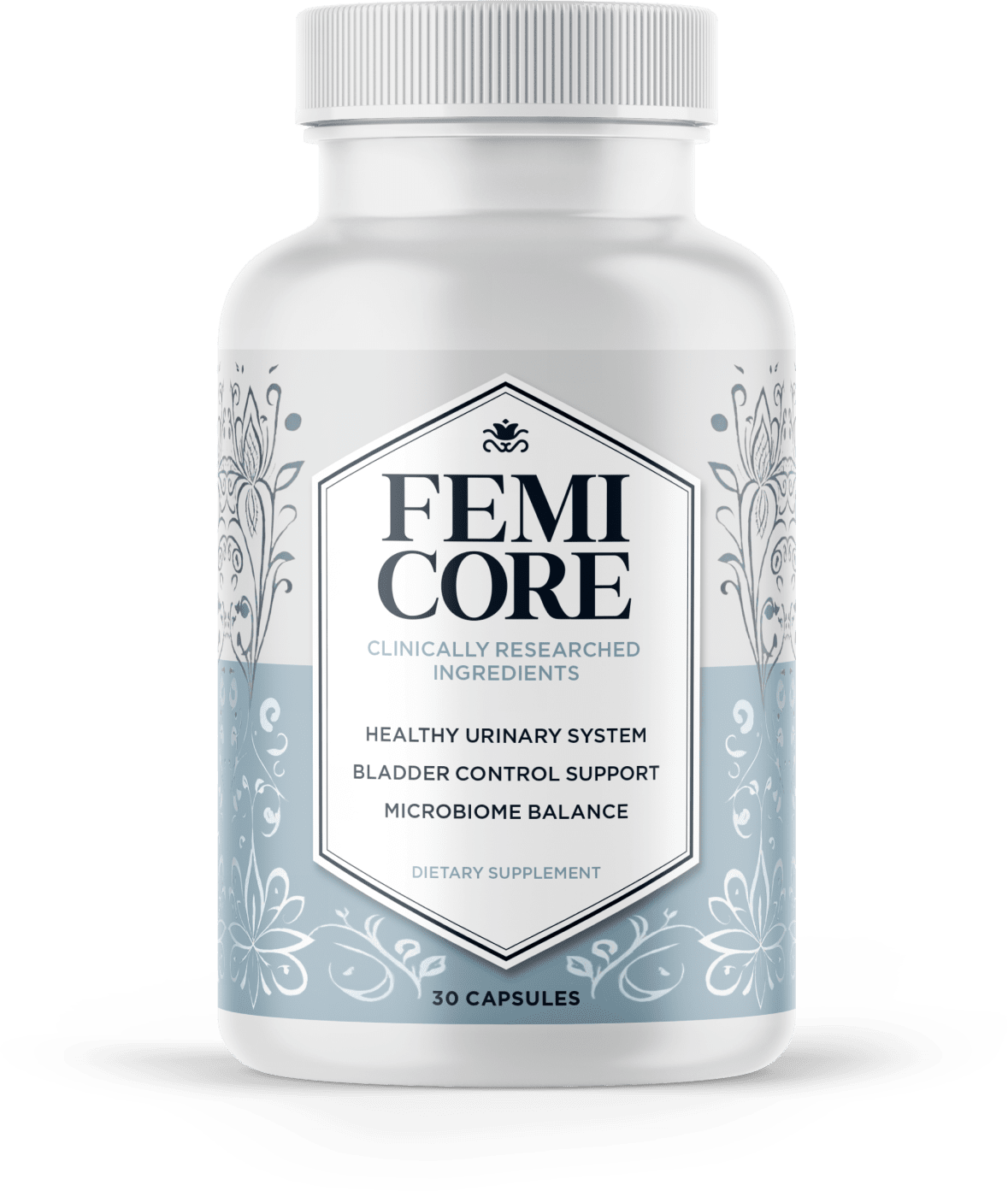
Official product image supplied by the seller.
A supplement should not delay diagnosis
Probiotics for urinary health are not a substitute for evaluation when symptoms may represent an active infection or another medical condition.
Seek timely medical care for concerning symptoms
Contact a qualified healthcare professional for painful urination, fever, chills, blood in urine, back or side pain, vomiting, rapidly worsening symptoms, pregnancy, recurrent episodes or symptoms that do not improve. Urgent symptoms require urgent care.
Related evidence guides
Questions about probiotics and urinary wellness
Can probiotics treat an active urinary tract infection?
No. Probiotic supplements should not be presented as a treatment for an active UTI and should not replace medical evaluation or prescribed treatment.
What is the best probiotic for urinary health?
There is no universally proven “best” product. The decision depends on exact strain, route, dose, intended outcome, finished-product evidence, safety and individual medical context.
Are oral probiotics and vaginal probiotics the same?
No. They use different delivery routes and should be evaluated against evidence that matches the route and formulation being considered.
Can cranberry and probiotics be taken together?
They appear together in some wellness formulas, but research on each ingredient does not automatically prove the complete combination. Suitability should be reviewed when medication, pregnancy, breastfeeding or health conditions are involved.
How long should someone take a probiotic?
Study duration and product directions vary. Avoid assuming that a fixed number of days guarantees a result; follow the label and obtain professional guidance when symptoms are recurrent or persistent.
Research used in this guide
- Gupta V, Mastromarino P, Garg R. Randomized trial of oral and/or vaginal probiotics for recurrent UTI prevention. Clinical Infectious Diseases, 2024.
- Abdullatif VA et al. Systematic review and meta-analysis of probiotics for UTI prophylaxis in premenopausal women, 2021.
- Shoureshi PS et al. Systematic review of vaginal Lactobacillus suppositories and recurrent UTI, 2023.
- Stapleton AE et al. Phase 2 randomized trial of intravaginal Lactobacillus crispatus for recurrent UTI prevention, 2011.
- NICE guideline: recurrent urinary tract infection—antimicrobial prescribing.
- American Urological Association guideline: recurrent uncomplicated urinary tract infections in women.
Choose from verified information—not a generic probiotic promise.
Read the complete product analysis first. If the formula still fits your preferences, use the official presentation to verify the current label, directions, price and refund terms before deciding.
Current commercial terms are controlled by the seller and may change. This guide does not guarantee individual results.