Supplements for bladder control: what to check before buying
Supplements for bladder control are marketed for urgency, frequency, leaks and general urinary wellness—but those symptoms do not always have the same cause. This guide shows what the evidence can and cannot establish before you buy.
- Separate bladder-control symptoms from UTI and bladder-pain concerns
- Compare ingredient evidence with finished-formula evidence
- Use seven practical checks for labels, safety, price and refund terms
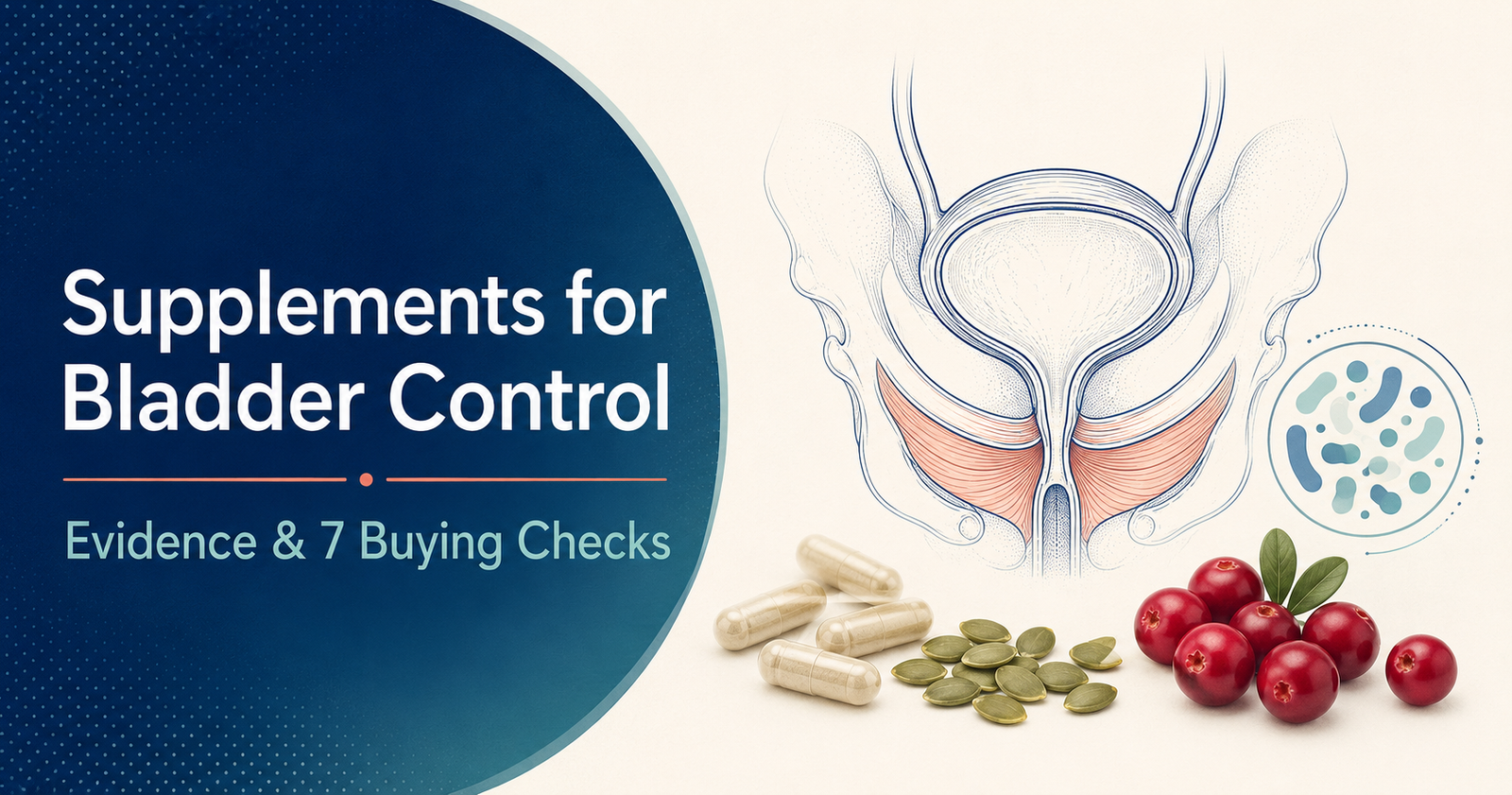
Educational illustration. Product appearance and ingredient imagery do not prove clinical effectiveness.
Before comparing supplements for bladder control, the most important first step is identifying what problem you are trying to address. Current clinical guidance supports evaluation, bladder training and pelvic-floor approaches for many bladder-control problems. Evidence for nutraceuticals and supplements remains limited or product-specific, so a supplement should not replace diagnosis or established care.
What does “bladder control” mean in your case?
Consumers often use one phrase for several different experiences. A product promoted for general urinary wellness may not address the reason a person is leaking, rushing to the bathroom or feeling discomfort.
Stress leakage
Leakage with coughing, laughing, lifting or exercise can be related to pelvic-floor and pressure-management issues.
Urgency or frequency
A sudden hard-to-control urge, frequent trips or nighttime urination can have several causes and deserves context.
Recurrent UTI concern
Prevention research is different from treating an active infection. Burning, fever or worsening symptoms should not be self-treated with a supplement.
Pain or pressure
Bladder or pelvic pain is not simply a “control” problem and can require a different clinical assessment.
Do not let a supplement delay care
Seek medical advice promptly for blood in the urine, fever, severe or worsening pain, difficulty urinating, new neurological symptoms, pregnancy-related urinary concerns or symptoms that persist. A clinician can help distinguish infection, pelvic-floor dysfunction, overactive bladder, medication effects and other causes.
Three evidence levels buyers should keep separate
When evaluating supplements for bladder control, the phrase “clinically researched ingredients” can sound like the complete product has been proven. Those are not necessarily the same claim.
For many bladder-control problems, established approaches include symptom assessment, lifestyle changes, bladder training and pelvic-floor muscle therapy. The right approach depends on the symptom pattern and individual health history.
An ingredient may have a plausible mechanism or limited studies in a specific population. That does not automatically establish the effect of every dose, extract, blend or finished supplement containing it.
Terms such as “supports,” “promotes” and “helps maintain” are structure/function language. They should be truthful and non-misleading, but they are not the same as evidence that a product diagnoses, treats, cures or prevents disease.
Common ingredients in supplements for bladder control
The ingredient name alone is not enough. Dose, extract standardization, probiotic strain, study population and the intended outcome all affect how relevant the evidence is.
| Ingredient or category | Why it appears in products | What to verify | Important limitation |
|---|---|---|---|
| Pumpkin seed or soy-germ extracts | Frequently positioned for urinary frequency, urgency or pelvic support. | Exact extract, daily dose, study design and whether the finished product was studied. | Small or product-specific studies cannot be generalized to every formula. |
| Cranberry | Commonly used in urinary-health products and studied mainly for recurrent UTI prevention in some groups. | Proanthocyanidin (PAC) standardization, dose, serving size and drug-interaction warnings. | Cranberry is not a treatment for an existing UTI and does not directly prove improved bladder control. |
| Probiotics | Marketed around urinary, vaginal or microbiome balance. | Genus, species, strain, colony-forming units through expiration and storage requirements. | Effects are strain-specific; general probiotic language is not enough to establish a bladder-control benefit. |
| D-mannose | Often promoted for urinary-tract support. | Intended goal, dose, medical history and whether the claim concerns prevention or symptom relief. | UTI-prevention questions are different from urgency, leakage and overactive-bladder outcomes. |
| Vitamins and minerals | Included for general muscle, nerve or wellness positioning. | Whether there is a documented deficiency, total daily intake and upper-limit concerns. | Correcting a deficiency is not proof that higher doses improve bladder control in everyone. |
| Multi-herb blends | Combine several mechanisms into one daily capsule. | Every ingredient and dose, proprietary-blend transparency, testing and finished-formula evidence. | More ingredients do not automatically mean a stronger or safer effect. |
The 7 checks to make before buying
Use these checks to compare supplements for bladder control without relying on a dramatic headline, a single review or the number of ingredients on the front label.
Match the product to the actual goal
Is the concern stress leakage, urgency, nighttime trips, recurrent UTI prevention, discomfort or general wellness? If the goal is unclear, the product comparison will be unclear too.
Read the complete Supplement Facts panel
Confirm serving size, exact amounts, daily capsule count and whether a proprietary blend hides individual doses.
Look for meaningful specifications
Check extract standardization, PAC content for cranberry, full probiotic strain names, potency through expiration and storage directions. For a detailed evaluation framework, read our guide to probiotics for urinary health.
Ask what was actually studied
Was the finished formula studied, or is the seller extrapolating from research on separate ingredients, different doses or different populations?
Verify quality information
Look for manufacturer identity, lot and expiration information, transparent testing practices and credible independent certification when available. A quality badge should be verifiable.
Review safety and interactions
Discuss use with a qualified professional if you are pregnant, breastfeeding, preparing for surgery, immunocompromised or taking medication—especially anticoagulants or medicines affected by supplements.
Calculate the real price and read the refund terms
Compare cost per daily serving, shipping, subscription conditions, number of bottles required and the exact refund process. Confirm current terms on the official seller page before paying.
What common label phrases do—and do not—tell you
The front labels of supplements for bladder control often compress a complicated evidence story into a few reassuring phrases. Translate each phrase before treating it as proof.
“Clinically researched ingredients”
Usually refers to research associated with one or more ingredients. It does not necessarily mean the exact finished formula was tested in a controlled human trial.
“Natural bladder support”
Describes positioning, not a guaranteed outcome. “Natural” does not remove the possibility of side effects, allergies or drug interactions.
“Made in an FDA-registered facility”
Facility registration is not the same as FDA approval of the supplement or confirmation that the product works as advertised.
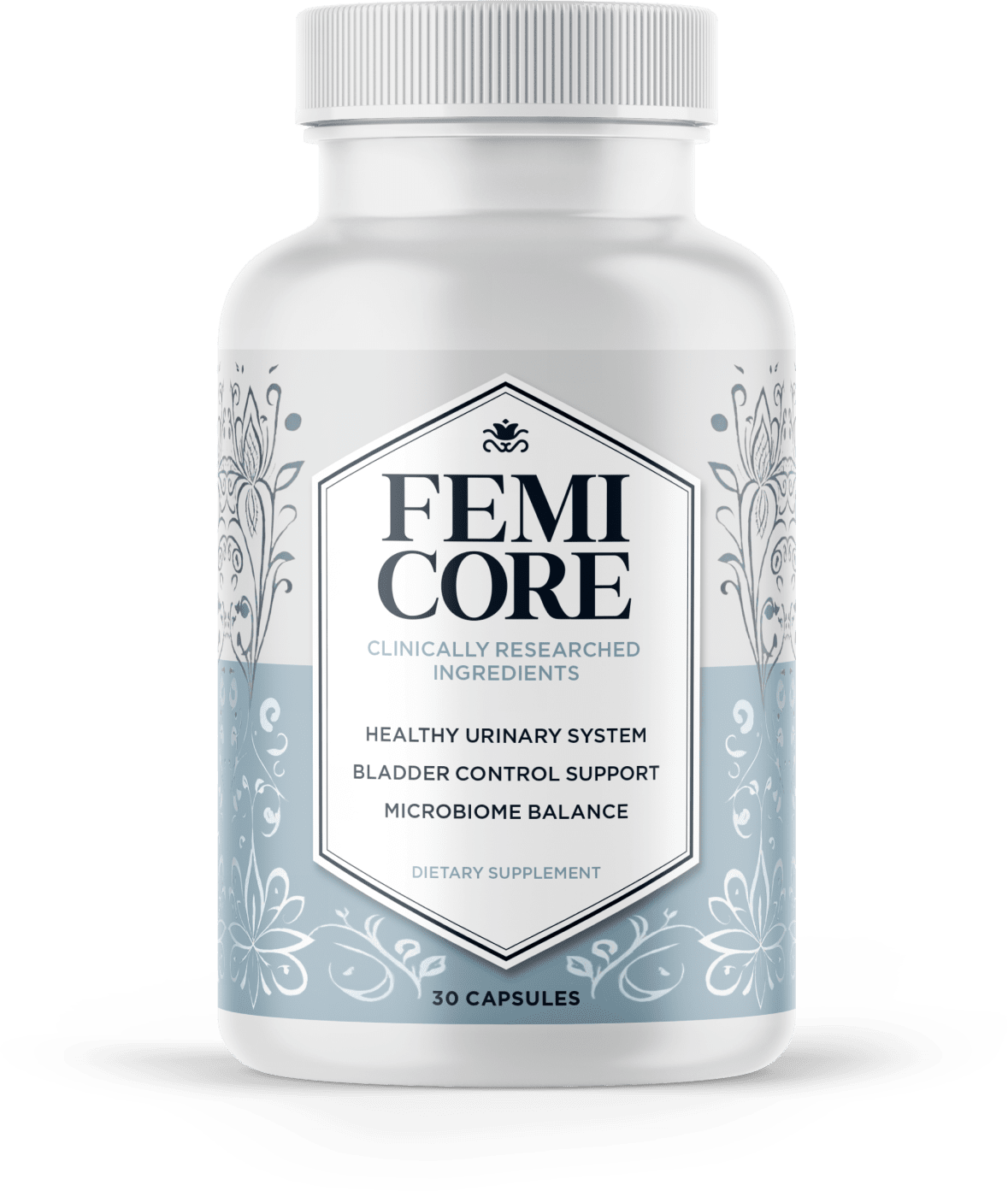
Where does FemiCore fit?
FemiCore is marketed as a daily multi-ingredient supplement for women interested in bladder, urinary and microbiome support. That positioning places it inside the broader category discussed in this guide; it does not, by itself, prove that the finished formula will work for every symptom or every person.
Our independent FemiCore review examines the seller’s claims, ingredient rationale, practical limitations, safety considerations, current purchase structure and advertised refund policy. Verify the current label and terms on the official presentation before making a decision.
Questions buyers often ask
What is the best supplement for bladder control?
There is no single supplement proven to be best for every cause of leakage, urgency or frequency. Start by identifying the symptom pattern, then compare the exact product, dose, evidence and safety profile with guidance from a qualified healthcare professional.
How long should a bladder supplement take to work?
There is no universal timeline. It depends on the ingredient, outcome measured, dose, individual health factors and whether the product is relevant to the underlying problem. A seller’s timeline should be checked against the actual study design, not treated as a guarantee.
Can cranberry stop bladder leakage?
Cranberry research primarily concerns recurrent urinary-tract infection prevention in some populations. That evidence should not be interpreted as proof that cranberry treats active infection or stops stress leakage, urgency or overactive-bladder symptoms.
Are probiotics proven for bladder control?
Probiotic effects are strain- and condition-specific. General “microbiome support” claims do not establish that any probiotic blend improves bladder control. Check the exact strains and the outcome studied.
Can I take a supplement instead of doing pelvic-floor exercises?
A supplement should not automatically replace established approaches. Pelvic-floor muscle training and bladder training are commonly recommended for appropriate bladder-control problems, while clinical guidance reports insufficient evidence for nutraceuticals in overactive bladder.
Our review standard
We separate seller claims from independent guidance, ingredient research from finished-formula evidence, and current offer terms from permanent product facts. Read our wellness review methodology for the complete process.
Primary references
- American Urological Association — Diagnosis and Treatment of Idiopathic Overactive Bladder
- NIDDK — Treatment of Bladder Control Problems
- NIDDK — Symptoms & Causes of Bladder Control Problems
- NCCIH — Cranberry: Usefulness and Safety
- NIH Office of Dietary Supplements — Probiotics Fact Sheet for Consumers
- NIH Office of Dietary Supplements — Dietary Supplements: What You Need to Know
- U.S. Food and Drug Administration — Structure/Function Claims
Make the decision from verified information
Compare supplements for bladder control by symptom goal, full label, relevant evidence, safety information, total price and refund process. For a product-specific example, continue with our independent FemiCore analysis.